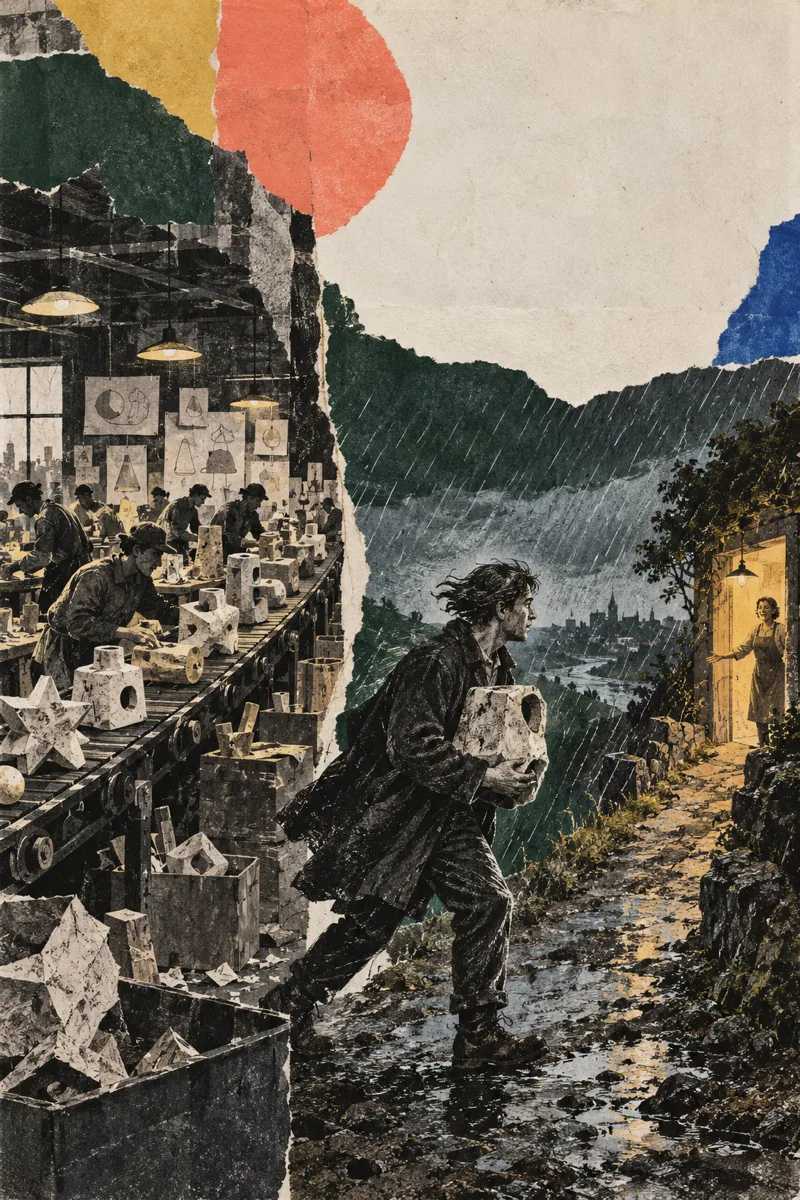
AI Made Everyone Look High-Agency.
Starting has become nearly free. The real signal is what happens after your work meets reality.
“High agency” is everywhere.
It is in hiring packets, performance reviews, and conversations between managers and their teams. Everyone wants high-agency people. Everyone wants to become one.
But I’m not sure we agree on what that means.
Usually, we recognize agency through its most visible behavior: someone sees a problem, raises their hand, and starts something without waiting for permission.
That used to be a reasonably strong signal.
Then AI made starting almost trivial.
Give someone a good model and a decent harness, and they can produce a prototype, landing page, workflow, strategy document, or functioning MVP before lunch.
The artifact is real.
The signal is weaker.
The signal movedStarting is visible. Agency begins after the start.
Starting was never the point.
More people being able to turn ideas into prototypes is a good thing. When the first attempt is cheap, we should take more shots.
But starting ten projects does not make someone high-agency.
It may just leave ten unfinished projects.
Managing two talented interns this summer made the distinction clearer to me. Both were perfectly capable of building things. The harder skill was releasing something imperfect, putting it in front of actual users, and allowing their reactions to change the work.
Our instinct is often to keep polishing.
The button could look better. The workflow needs another edge case. The prompt could be sharper. Claude has three more suggestions.
It feels productive because we are producing.
But you can spend weeks making something perfect inside a reality shared only by you and the model.
Shipping punctures that reality.
Someone misunderstands the interface. They ignore the feature you thought they would love. They use it in a way you never anticipated, or they simply do not use it.
That moment is uncomfortable.
It is also where agency starts becoming visible.
Agency begins where control ends.
Building something is usually a means to an end.
If you are building for yourself, the end might simply be making your own life better. But if you are building for other people, the work is not finished when the code deploys.
It has to reach them.
You have to listen to them.
You have to measure what happened.
And then you have to act on what you learn.
When the data is good, everyone is data-driven. When the data is bad, most people suddenly have a story.
High-agency people stay with the uncomfortable result.
They do not hide behind activity, effort, or vibes. They look at what changed, admit when it was less than they hoped, and decide what happens next.
Sometimes they iterate.
Sometimes they hand the work over.
Sometimes they kill it.
That is why I think closure is a better signal than completion. Completing a bad project simply because you started it is not agency. Resolving the loop, even when the answer is this is not worth continuing, is.
The work reached the end of its plan.
The loop reached an owned decision.
Ship it. Expose it to reality. Accept what reality says. Act accordingly.
AI will flood companies with beginnings.
Over the next few years, good models and good harnesses will become abundant.
Every company will have more prototypes, proposals, automations, and internal tools than it knows what to do with. The ability to create the first version will stop differentiating people as much as it once did.
This is the organizational version of something I ran into personally: AI gave me more capacity than I knew what to do with. The beginnings multiplied before my attention did.
The scarce skills will move further down the loop:
START → SHIP → OBSERVE → DECIDE
AI dramatically compresses the first step.
It does not automatically create ownership of the rest.
| Visible immediately | Visible after reality |
|---|---|
| Ideas | Adoption |
| Prototypes | Changed behavior |
| Demos | Uncomfortable data |
| Launches | Iteration or termination |
This means managers will need to become more careful about what they reward. Demos, documents, and launches are visible. Adoption, iteration, cleanup, and killing failed work are quieter.
But those quieter behaviors are often where the outcome is created.
The same is true for your career.
Early on, having ideas and raising your hand can take you far. Eventually, your career stops being a record of how often you volunteered and becomes a record of what changed after you did.
There are exceptions. A founder or executive may create leverage by generating ideas and assembling the right people to execute them. High agency does not mean personally doing everything.
It means ensuring the loop has an owner, and refusing to confuse visible motion with progress.
The new signal.
AI has not made agency less valuable.
It has made superficial agency easier to perform.
So do not show me only what you started.
What did you release before it felt completely safe?
What feedback did you receive, especially the feedback you disliked?
Which metric did not move?
What did you change afterward?
What did you kill once reality gave you the answer?
The new signalStarting is abundant now.
Closure is not.
What happened after you shipped?
If you are building systems that have to survive contact with reality, I’d like to compare notes.
Start a conversation →